Common Procedures

Regular Exams and Cleanings
Regular exams are an important part of maintaining your oral health. During your regular exam we will:
- Check for any problems that you may not see or feel
- Look for cavities or any other signs of tooth decay
- Inspect your teeth and gums for gingivitis and signs of periodontal disease
- Screen your mouth and teeth for orthodontic, TMJ, and soft tissue problems.
Your regular exam will take about 45-60 minutes. Most of the time we can schedule a thorough teeth cleaning to follow the exam. During your cleaning appointment our talented hygienists will clean, polish and rinse your teeth to remove any tartar and plaque that has built up on their surfaces. Wendy and Patty are wonderful hygienists who care deeply about their patients and their teeth and gums.
Visiting our office every six months gives you the chance to talk to the doctor about any questions you may have about your oral health. Regular exams are offered by appointment only so please contact our practice today to schedule your next dental exam and teeth cleaning.
Bonding
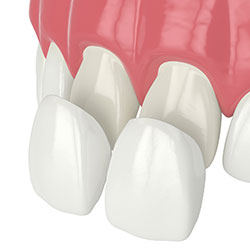 Bonding is a conservative way to
repair slightly chipped, discolored or crooked teeth. During dental bonding a
white filling is placed onto your tooth to improve its appearance. The filling
"bonds" with your tooth and because it comes in a variety of tooth-colored
shades it closely matches the appearance of your natural teeth.
Bonding is a conservative way to
repair slightly chipped, discolored or crooked teeth. During dental bonding a
white filling is placed onto your tooth to improve its appearance. The filling
"bonds" with your tooth and because it comes in a variety of tooth-colored
shades it closely matches the appearance of your natural teeth.
In our practice we only use bonded or "white" fillings. These are far less noticeable than the silver amalgam fillings, are safe to use and long lasting. White fillings can be used on front and back teeth depending on the location and extent of tooth decay.
Bonding is less expensive than other cosmetic treatments and usually can be completed in one visit to our office. Bondings can stain and are easier to break than other cosmetic treatments such as porcelain veneers. One advantage is that if a bonding does break or chip it can generally can be easily patched or repaired in one visit.
Bridges
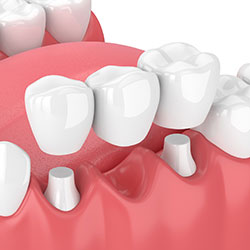 A bridge may be used to replace
missing teeth, help maintain the shape of your face and alleviate stress on
your bite.
A bridge may be used to replace
missing teeth, help maintain the shape of your face and alleviate stress on
your bite.
A bridge replaces missing teeth with artificial teeth, looks great and literally bridges the gap where one or more teeth may have been. Your bridge can be made from gold, alloys, porcelain or a combination of these materials and is bonded onto surrounding teeth for support.
The success of any bridge depends on its foundation: the other teeth, gums, or bone to which it is attached. Therefore, it’s very important to keep your existing teeth, gums, and jaw healthy and strong.
Crowns
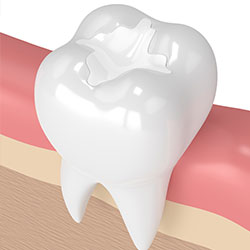 Crowns are a cosmetic restoration
used to improve your tooth’s shape or to strengthen a weakened tooth. Crowns
are most often used for teeth that are broken, worn or have portions destroyed
by tooth decay.
Crowns are a cosmetic restoration
used to improve your tooth’s shape or to strengthen a weakened tooth. Crowns
are most often used for teeth that are broken, worn or have portions destroyed
by tooth decay.
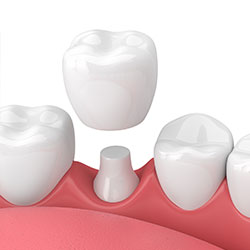
Crowns or onlays (partial crowns) are needed when there is insufficient tooth strength remaining to hold a filling. Unlike fillings which apply the restorative material directly into your mouth, a crown is fabricated away from your mouth.
A crown is a "cap" cemented onto an existing tooth that usually covers the portion of your tooth above the gum line. In effect, the crown becomes your tooth’s new outer surface. Crowns can be made of porcelain, metal or both. Porcelain crowns are most often preferred because they mimic the translucency of natural teeth and are very strong. CEREC technology is the state of the art in modern dentistry and allows us to make your all ceramic crown in the office while you wait. This eliminates a second visit and also time spent wearing a temporary crown which could fall off the tooth causing inconvenience.
Your crown is created using our state of the art CEREC CAD-CAM system which eliminates traditional tooth impressions with goo as well as temporaries which can fall off the tooth and allow teeth to become sensitive. Our all ceramic and metal free crowns are made in a single visit so you do not have to waste valuable time with a second visit as with traditional lab made crowns.
%20(1%20of%201).jpg)
Dentures
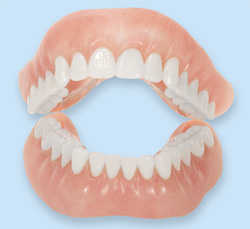 Dentures are natural-looking
replacement teeth that are removable. There are two types of dentures:
full and partial. Full dentures are given to patients when all of the
natural teeth have been removed. Partial dentures are attached to a metal frame
that is connected to your natural teeth and are used to fill in where permanent
teeth have been removed. Just like natural teeth, dentures need to be cared
for. Use a gentle cleanser to brush your dentures, always keep them moist
when they’re not in use and be sure to keep your tongue and gums clean as
well.
Dentures are natural-looking
replacement teeth that are removable. There are two types of dentures:
full and partial. Full dentures are given to patients when all of the
natural teeth have been removed. Partial dentures are attached to a metal frame
that is connected to your natural teeth and are used to fill in where permanent
teeth have been removed. Just like natural teeth, dentures need to be cared
for. Use a gentle cleanser to brush your dentures, always keep them moist
when they’re not in use and be sure to keep your tongue and gums clean as
well.
Digital X-Rays
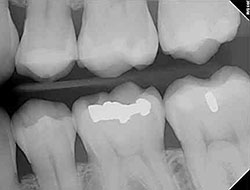 Using the most advanced dental
technology possible is just as important as staying up-to-date on the latest
treatment techniques. Because our practice is dedicated to providing you
with the safest and most convenient treatment options available we utilize
advanced digital X-ray technology in our office.
Using the most advanced dental
technology possible is just as important as staying up-to-date on the latest
treatment techniques. Because our practice is dedicated to providing you
with the safest and most convenient treatment options available we utilize
advanced digital X-ray technology in our office.
Digital X-rays provide several advanced imaging options that are designed to save time, provide clearer dental photos and expose patients to less radiation than with traditional X-ray technology.
Our practice is focused on making your dental experience as comfortable as possible. At your next appointment, we’ll be happy to answer any questions you may have.
Extractions
 There are times when it is
necessary to remove a tooth. Sometimes a baby tooth has misshapen or long roots
that prevent it from falling out as it should and the tooth must be removed to
make way for the permanent tooth to erupt. At other times a tooth may
have so much decay that it puts the surrounding teeth and jaw at risk of decay
so your doctor may recommend removal and replacement with a bridge or implant.
Infection, orthodontic correction or problems with a wisdom tooth can
also require removal of a tooth.
There are times when it is
necessary to remove a tooth. Sometimes a baby tooth has misshapen or long roots
that prevent it from falling out as it should and the tooth must be removed to
make way for the permanent tooth to erupt. At other times a tooth may
have so much decay that it puts the surrounding teeth and jaw at risk of decay
so your doctor may recommend removal and replacement with a bridge or implant.
Infection, orthodontic correction or problems with a wisdom tooth can
also require removal of a tooth.
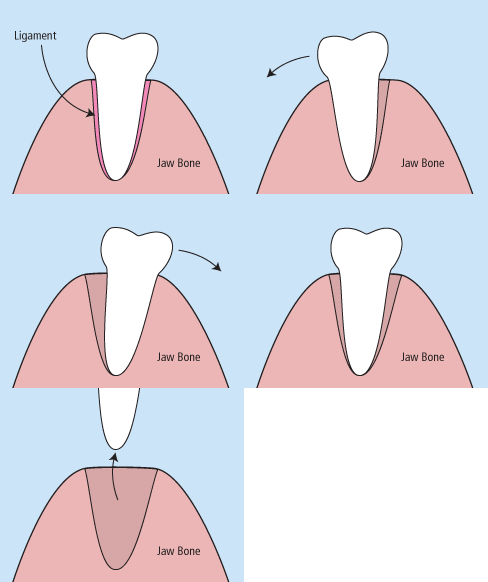
When it is determined that a tooth needs to be removed, your dentist may extract the tooth during a regular checkup or may request another visit for this procedure. The root of each tooth is encased within your jawbone in a "tooth socket" and your tooth is held in that socket by a ligament. In order to extract a tooth your dentist must expand the socket and separate the tooth from the ligament holding it in place. While this procedure is typically very quick, it is important to share with your doctor any concerns or preferences for sedation.
Once a tooth has been removed, neighboring teeth may shift causing problems with chewing or with your jaw joint function. To avoid these complications, your dentist may recommend that you replace the extracted tooth.
Fillings
 Traditional dental restoratives, or
fillings may include gold, porcelain and composite. Newer dental fillings
include ceramic and plastic compounds that mimic the appearance of natural
teeth. These compounds, often called composite resins are typically used
on the front teeth where a natural appearance is important. There are two
different kinds of fillings: direct and indirect. Direct fillings are
fillings placed directly into a prepared cavity in a single visit.
Indirect fillings generally require two or more visits. These
fillings include inlays and veneers fabricated with ceramics or composites.
Traditional dental restoratives, or
fillings may include gold, porcelain and composite. Newer dental fillings
include ceramic and plastic compounds that mimic the appearance of natural
teeth. These compounds, often called composite resins are typically used
on the front teeth where a natural appearance is important. There are two
different kinds of fillings: direct and indirect. Direct fillings are
fillings placed directly into a prepared cavity in a single visit.
Indirect fillings generally require two or more visits. These
fillings include inlays and veneers fabricated with ceramics or composites.
Implant Restoration
 If you have missing teeth it is
crucial to replace them. Without all your teeth, chewing and eating can
destabilize your bite and cause you discomfort. When teeth are missing
your mouth can shift and even cause your face to look older. Implants are
a great way to replace your missing teeth and if properly maintained can last a
lifetime!
If you have missing teeth it is
crucial to replace them. Without all your teeth, chewing and eating can
destabilize your bite and cause you discomfort. When teeth are missing
your mouth can shift and even cause your face to look older. Implants are
a great way to replace your missing teeth and if properly maintained can last a
lifetime!
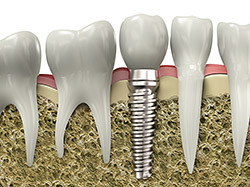
An implant is a new tooth made of metal and porcelain that looks just like your natural tooth. It’s composed of two main parts: One part is the titanium implant body that takes the place of the missing root and the second part is the tooth-colored crown that is cemented on top of the implant. With implant treatment you can smile confidently knowing no one will ever suspect you have a replacement tooth.
In addition to tooth replacement, implants may be used to anchor dentures, especially lower dentures that tend to shift when you talk or chew. For patients with removable partial dentures, implants can replace missing teeth so you have a more natural-looking smile.
Intraoral Camera
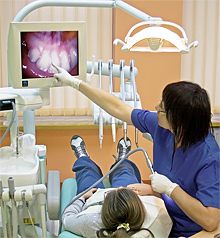 You know the importance of
prevention when it comes to your dental health and we’re always looking for new
improved ways to help you achieve a healthy smile for life. While X-rays
provide valuable information, they don’t give a complete view of everything
that is going on inside your mouth. With the use of an intraoral camera
we can see every aspect of your teeth and mouth with incredible detail
uncovering cracked teeth, plaque deposits, cavities next to fillings and
excessive wear. When we can discover oral problems early on, your
treatment is much less invasive and much more cost effective.
You know the importance of
prevention when it comes to your dental health and we’re always looking for new
improved ways to help you achieve a healthy smile for life. While X-rays
provide valuable information, they don’t give a complete view of everything
that is going on inside your mouth. With the use of an intraoral camera
we can see every aspect of your teeth and mouth with incredible detail
uncovering cracked teeth, plaque deposits, cavities next to fillings and
excessive wear. When we can discover oral problems early on, your
treatment is much less invasive and much more cost effective.
Our intraoral camera is small, about the size of the mirror we use during your regular hygiene appointments. You probably wouldn’t even notice we’re using it except that with the intraoral camera, you have the opportunity to see everything we see on a monitor. This is a great tool to help you become more informed about your dental health as it gives you a clear understanding of your teeth’s condition and it allows you to make a more informed decision regarding your treatment options.
Fluoride
Fluoride is effective in preventing cavities and tooth decay and in preventing plaque from building up and hardening on the tooth’s surface. A fluoride treatment in your dentist’s office takes just a few minutes. After the treatment, you may be asked not to rinse, eat or drink for at least 30 minutes in order to allow the teeth to absorb the fluoride. Depending on your oral health or your doctor’s recommendation, you may be required to have a fluoride treatment every three, six or 12 months.
Mouthguards
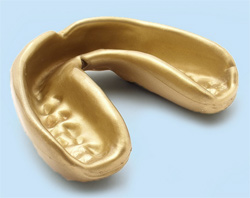 Whether you wear braces or not,
protecting your smile while playing sports is essential. Mouthguards help
protect your teeth and gums from injury. If you participate in any kind
of full-contact sport, the American Dental Association recommends that you wear
a mouthguard. Choosing the right mouthguard is essential. There are
three basic types of mouthguards: the pre-made mouthguard, the "boil-and-bite"
fitted mouthguard and a custom-made mouthguard from your dentist. When
you chose a mouthguard, be sure to pick one that is tear-resistant, comfortable
and well-fitted for your mouth. Other important attributes are that it be
easy to keep clean and does not prevent you from breathing properly. Your
dentist can show you how to wear a mouthguard properly and how to choose the
right mouthguard to protect your smile.
Whether you wear braces or not,
protecting your smile while playing sports is essential. Mouthguards help
protect your teeth and gums from injury. If you participate in any kind
of full-contact sport, the American Dental Association recommends that you wear
a mouthguard. Choosing the right mouthguard is essential. There are
three basic types of mouthguards: the pre-made mouthguard, the "boil-and-bite"
fitted mouthguard and a custom-made mouthguard from your dentist. When
you chose a mouthguard, be sure to pick one that is tear-resistant, comfortable
and well-fitted for your mouth. Other important attributes are that it be
easy to keep clean and does not prevent you from breathing properly. Your
dentist can show you how to wear a mouthguard properly and how to choose the
right mouthguard to protect your smile.
Root Canals
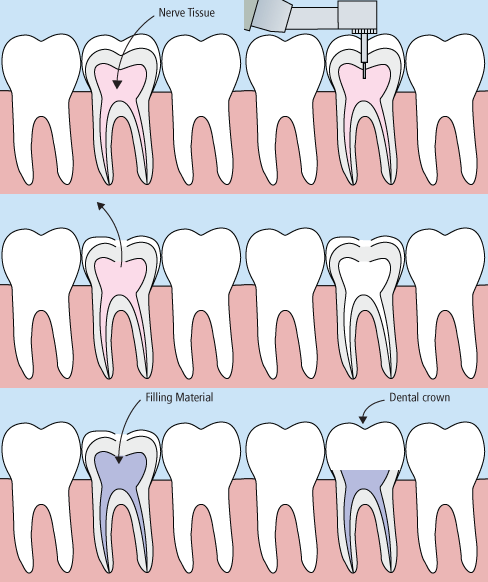 In the past, if you had a tooth
with a diseased nerve, you'd probably lose that tooth. Today, with a special
dental procedure called root canal treatment, your tooth can be saved.
When a tooth is cracked or has a deep cavity, bacteria can enter the pulp
tissue and germs can cause an infection inside the tooth. If left
untreated an abscess may form. If the infected tissue is not removed,
pain and swelling can result. This can not only injure your jawbones but
is detrimental to your overall health.
In the past, if you had a tooth
with a diseased nerve, you'd probably lose that tooth. Today, with a special
dental procedure called root canal treatment, your tooth can be saved.
When a tooth is cracked or has a deep cavity, bacteria can enter the pulp
tissue and germs can cause an infection inside the tooth. If left
untreated an abscess may form. If the infected tissue is not removed,
pain and swelling can result. This can not only injure your jawbones but
is detrimental to your overall health.
Root canal treatment involves one to three visits. During treatment, your general dentist or endodontist (a dentist who specializes in problems with the nerves of the teeth) removes the affected tissue. Next, the interior of the tooth will be cleaned and sealed. Finally, the tooth is filled with a dental composite. If your tooth has extensive decay, your doctor may suggest placing a crown to strengthen and protect the tooth from breaking. As long as you continue to care for your teeth and gums with regular brushing, flossing and checkups, your restored tooth can last a lifetime.
Sealants
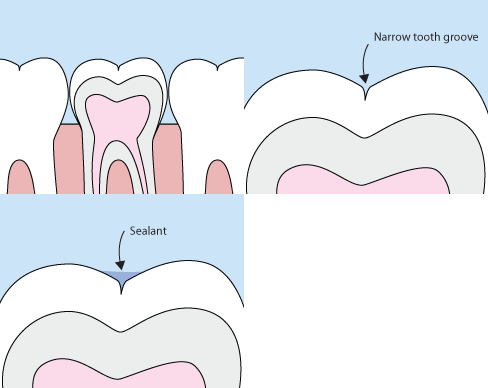 Sometimes brushing is not enough,
especially when it comes to those hard-to-reach spots in your mouth. It
is difficult for your toothbrush to get in between the small cracks and grooves
on your teeth. If left alone, those tiny areas can develop tooth decay.
Sealants give your teeth extra protection against decay and help prevent
cavities.
Sometimes brushing is not enough,
especially when it comes to those hard-to-reach spots in your mouth. It
is difficult for your toothbrush to get in between the small cracks and grooves
on your teeth. If left alone, those tiny areas can develop tooth decay.
Sealants give your teeth extra protection against decay and help prevent
cavities.
A dental sealant is a plastic resin that bonds and hardens in the deep grooves on your tooth’s surface. When a tooth is sealed, the tiny grooves become smooth and are less likely to harbor plaque. With sealants, brushing your teeth becomes easier and more effective against tooth decay.
Sealants are typically applied to children’s teeth as a preventive measure after the permanent teeth have erupted as a way to prevent tooth decay. Adults also can receive sealants on healthy teeth. It is more common to seal "permanent" teeth rather than "baby" teeth, but every patient has unique needs. Your dentist will recommend sealants on a case-by-case basis.
Sealants last from three to five years, although it is fairly common to see adults with sealants still intact from their childhood. A dental sealant only provides protection when it is fully intact, so if your sealants come off, let your dentist know and schedule an appointment for your teeth to be re-sealed.
Veneers
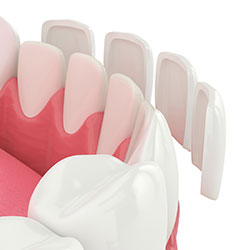 You no longer need to hide your smile
because of gaps, chips, stains or misshapen teeth. With veneers, you can
easily correct your teeth’s imperfections to help you have a more confident and
beautiful smile. Veneers are natural in appearance and they are a perfect
alternative for patients wanting to make minor adjustments to the look and feel
of their smile.
You no longer need to hide your smile
because of gaps, chips, stains or misshapen teeth. With veneers, you can
easily correct your teeth’s imperfections to help you have a more confident and
beautiful smile. Veneers are natural in appearance and they are a perfect
alternative for patients wanting to make minor adjustments to the look and feel
of their smile.
Veneers are thin, custom-made shells made from tooth-colored materials (such as porcelain) designed to cover the front side of your teeth. To prepare for veneers your doctor will create a unique model of your teeth. This model is sent to the dental technician to create your veneers. Before placing your new veneer, your doctor may need to conservatively prepare your tooth to achieve the desired aesthetic result.
When the veneers are placed, you’ll be pleased to see that they look like your natural teeth. While veneers are stain resistant, your doctor may recommend that you avoid coffee, tea, red wine and tobacco to maintain the beauty of your new smile.
Wisdom Teeth
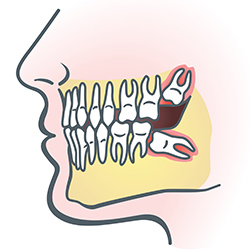 Wisdom teeth are types of
molars found in the very back of your mouth. These teeth usually appear
in late teens or early twenties but may become impacted (fail to erupt) due to
lack of room in the jaw or angle of entry. When a wisdom tooth is
impacted, it may need to be removed. If it is not removed, you may
develop gum tenderness, swelling or even severe pain. Impacted wisdom
teeth that are partially or fully erupted tend to be quite difficult to clean
and are susceptible to tooth decay, recurring infections and even gum
disease.
Wisdom teeth are types of
molars found in the very back of your mouth. These teeth usually appear
in late teens or early twenties but may become impacted (fail to erupt) due to
lack of room in the jaw or angle of entry. When a wisdom tooth is
impacted, it may need to be removed. If it is not removed, you may
develop gum tenderness, swelling or even severe pain. Impacted wisdom
teeth that are partially or fully erupted tend to be quite difficult to clean
and are susceptible to tooth decay, recurring infections and even gum
disease.
Wisdom teeth are typically removed in the late teens or early twenties because there is a greater chance that the teeth's roots have not fully formed and the bone surrounding the teeth is less dense. These two factors can make extraction easier as well as making the recovery time much shorter.
In order to remove a wisdom tooth, your dentist first needs to numb the area around the tooth with a local anesthetic. Since the impacted tooth may still be under the gums and imbedded in your jaw bone, your dentist will need to remove a portion of the covering bone to extract the tooth. In order to minimize the amount of bone that is removed with the tooth your dentist will often "section" your wisdom tooth so that each piece can be removed through a small opening in the bone. Once your wisdom teeth have been extracted, the healing process begins. Healing time varies depending on the degree of difficulty related to the extraction. Your dentist will share with you what to expect and provide instructions for a comfortable, efficient healing process.
Common Procedures
/ Cosmetic Dentistry
/ Gum Disease
/ Pediatric Dentistry
/ Preventive Care
Sedation Dentistry
/ TMJ/TMD
/ Emergency Dental Care
/ FAQs


